

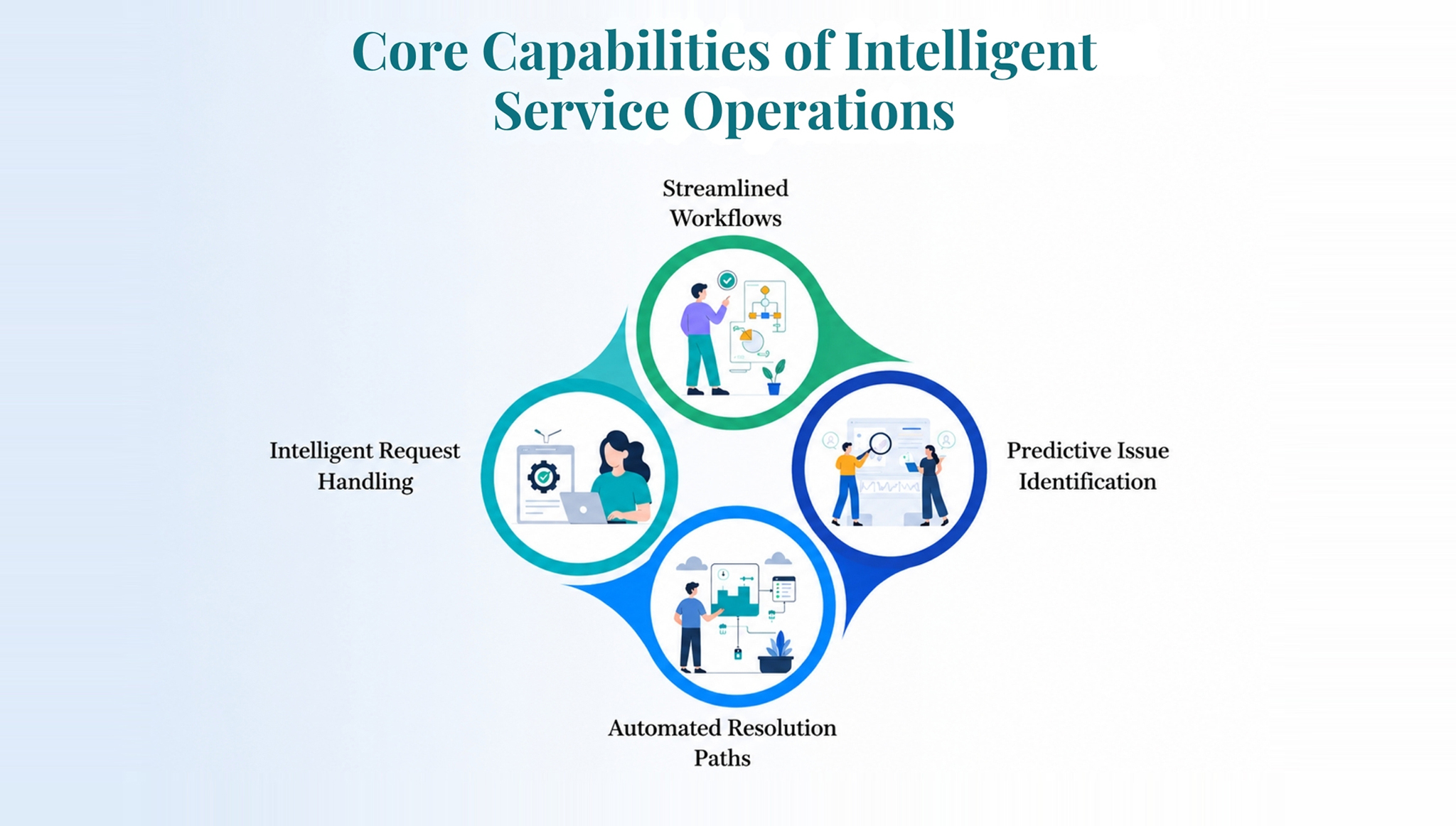
The Autonomous Edge: Transitioning to Predictive IT Operations
Traditional IT operations relied on a reactive model—waiting for systems to fail before responding. In today’s fast-paced, continuous-uptime enterprise, this is no longer viable. Organizations are now adopting predictive IT operations, which use analytics and automation to anticipate issues, minimize business impact, and shorten recovery times before disruptions occur.
Here is how the shift breaks down:
- The Old Way (Reactive): Teams monitor alerts and scramble to fix problems after an outage happens.
- The New Way (Predictive): Teams use intelligence and automation to identify patterns, address vulnerabilities, and intervene proactively.
- The Goal: Predictive IT doesn't eliminate all incidents, but it dramatically reduces downtime and protects the bottom line.
Reactive IT models rely on the assumption that system failures are rare and can be resolved manually. In modern distributed environments, this approach fails because constant interactions across cloud platforms, APIs, and microservices make issues frequent and complex.
Reactive strategies ultimately break down for several reasons:
- Alert fatigue: Support teams are overwhelmed by the sheer volume of notifications.
- Delayed troubleshooting: Pinpointing root causes becomes highly time-consuming.
- Revenue loss: System downtime directly disrupts customers and hurts the bottom line.
- Documentation lag: Infrastructure changes occur much faster than teams can document them.
- Scalability limits: Manual processes cannot keep up with rapid system growth.
As your infrastructure scales, the cost of reacting to every incident increases significantly. To overcome these challenges, organizations are increasingly adopting automated, predictive IT models to maintain operational resilience.
Traditional monitoring limits you to reactive, symptom-level alerts, whereas comprehensive observability provides the actionable, holistic context needed to prevent issues and ensure seamless performance.
Modern predictive operations rely on deep, systemic insights. Instead of just watching for server downtime, teams utilize observability to analyze:
- System component interactions and topology mapping
- Latency patterns and trace paths
- End-to-end user behavior and experience
- Comprehensive application performance
Predictive IT operations rely heavily on automation to minimize downtime. By streamlining remediation, scaling, and recovery, automated workflows eliminate manual bottlenecks and ensure consistent responses.
Key automated capabilities include:
- Restarting failed services automatically
- Scaling infrastructure dynamically during demand spikes
- Applying rapid configuration corrections
- Triggering predefined, step-by-step recovery workflows
When automation integrates with predictive analytics (AIOps), systems can identify and resolve anomalies upstream. This closed-loop approach fixes infrastructure issues before users experience any disruption.
Predictive IT operations deliver maximum value when directly tied to business outcomes. By shifting focus from isolated technical benchmarks to service uptime, user experience, and revenue preservation, organizations ensure that every operational enhancement directly drives strategic corporate goals.
Globtier Infotech assists businesses in shifting from reactive support to predictive IT operations built on automation, visibility, and quantifiable results.
We evaluate operational maturity, incident management procedures, and existing monitoring frameworks. Our group identifies automation opportunities, alerts inefficiencies, and visibility gaps.
Globtier facilitates the deployment of observability platforms, the improvement of incident workflows, the integration of automation, and the alignment of operational metrics with business objectives. We ensure predictive capabilities remain sustainable and continue to improve through managed services and operational support.

Author
Sanskriti Shukla
Head - Marketing & Communications