

How Managed Cybersecurity Services Reduce Business Security Risks
Cyber threats are becoming a common challenge for businesses of all sizes. A single phishing email, ransomware attack, or data breach can stop business operations, expose important information, and affect customer trust. As threats continue to change, businesses need more than basic antivirus software or occasional security checks to stay protected.
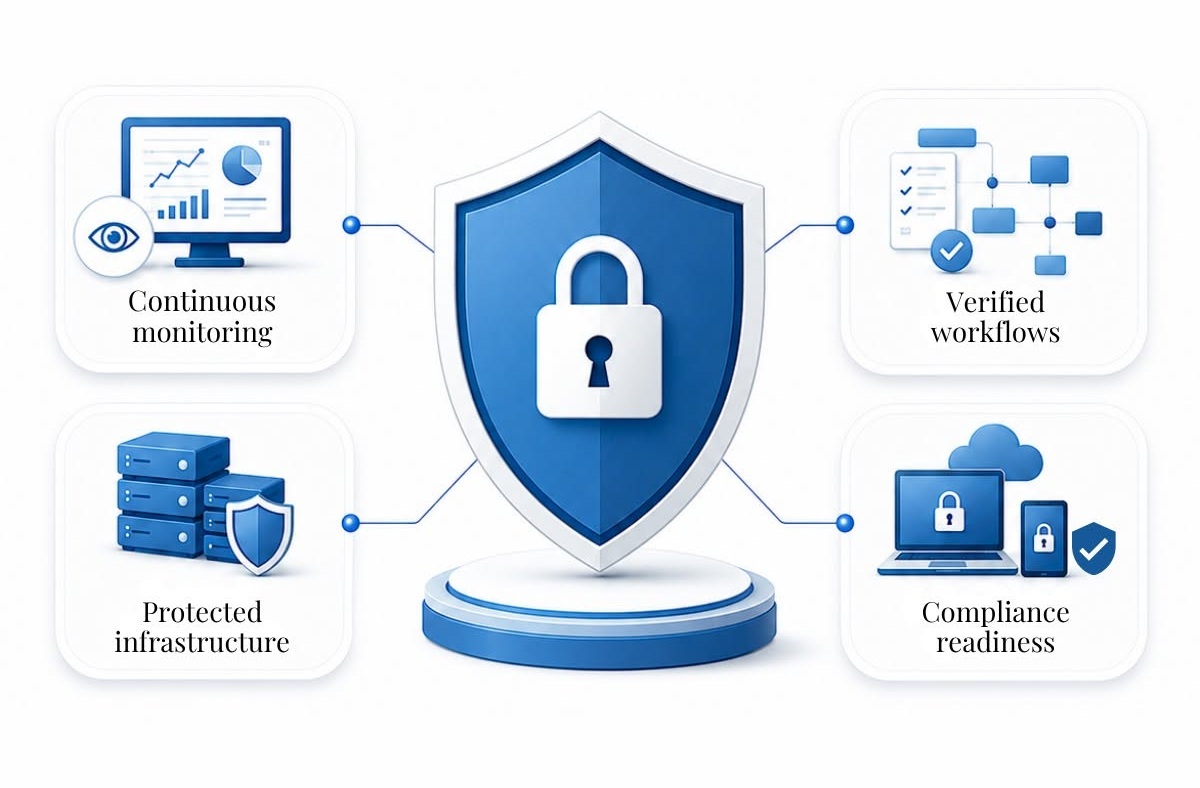
Managed cybersecurity services give businesses access to security experts, continuous monitoring, and quick threat detection without having to manage everything on their own. They help identify risks early, respond to attacks faster, and protect critical systems and data.
Why Businesses Face More Cybersecurity Risks Today:
Businesses depend on technology more than ever. They use digital tools for daily work, customer service, payments, and data storage. This makes business operations easier and faster. It also creates more opportunities for cybercriminals to target business systems.
Cloud services are another common source of risk. Businesses store important data and use many cloud-based applications. Weak passwords and incorrect security settings can expose sensitive information. Regular monitoring and proper access controls can help reduce these risks.
Cyberattacks are also becoming more advanced. Attackers use phishing, ransomware, malware, and social engineering to target businesses. These attacks can look very convincing. Even a small mistake by an employee can lead to a major security issue.
Third-party vendors can also create security risks. Businesses often share data and system access with external partners. If a vendor has a security problem, it can affect the business network as well.
Common Cybersecurity Risks Include:
- Phishing Attacks: Fake emails or messages trick people into sharing passwords, clicking harmful links, or revealing sensitive information.
- Weak or Stolen Passwords: Easy-to-guess or reused passwords can make it easier for hackers to access accounts and systems.
- Malware & Ransomware: Harmful software can damage systems, steal data, or lock important files until a ransom is demanded.
- Network Attacks: Hackers may target business networks to gain unauthorized access, disrupt operations, or steal information.
- Third-Party Risks: Vendors or external partners with weak security can create security gaps and put your business data at risk.
Benefits of Using Cybersecurity Services for Businesses:
- 24/7 Security Monitoring: Keeps your systems monitored around the clock to identify unusual or suspicious activity.
- Early Threat Detection: Helps find potential threats before they become bigger security problems.
- Faster Incident Response: Enables businesses to respond quickly to security incidents and reduce their impact.
- Regular Vulnerability Management: Identifies and fixes security weaknesses before hackers can take advantage of them.
- Protection Against Ransomware & Malware: Helps protect your systems, files, and data from harmful software and ransomware attacks.
- Better Endpoint Security: Protects laptops, desktops, and other devices connected to business network.
- Cloud Security Monitoring: Monitors cloud systems and applications to help keep the business data safe.
- Reduce Human Error: Helps minimize security risks caused by mistakes, weak passwords, or unsafe user actions.
- Improve Compliance & Reporting: Helps businesses meet security requirements and maintain clear records of their security activities.
Conclusion
Cybersecurity is essential to protecting business operations, critical data, and customer trust in an increasingly complex threat landscape. Globtier takes a proactive, end-to-end approach to cybersecurity, helping organizations identify vulnerabilities, strengthen defenses, detect and respond to threats, support compliance, and build long-term resilience. By combining security expertise, advanced technologies, and continuous monitoring, Globtier helps businesses stay ahead of evolving cyber risks while keeping their operations secure, resilient, and focused on growth.

Author