

From Insights to Impact: How BI and Analytics Support Business Growth
As data generation reaches unprecedented scales, combining data analytics with business intelligence (BI) has shifted from a competitive advantage to an operational necessity. This article explores how modern organizations bridge descriptive reporting with predictive models to turn raw enterprise data into decisive action.
Business Intelligence (BI) and Data Analytics use organizational data to improve decision-making, but they focus on different times and methods:
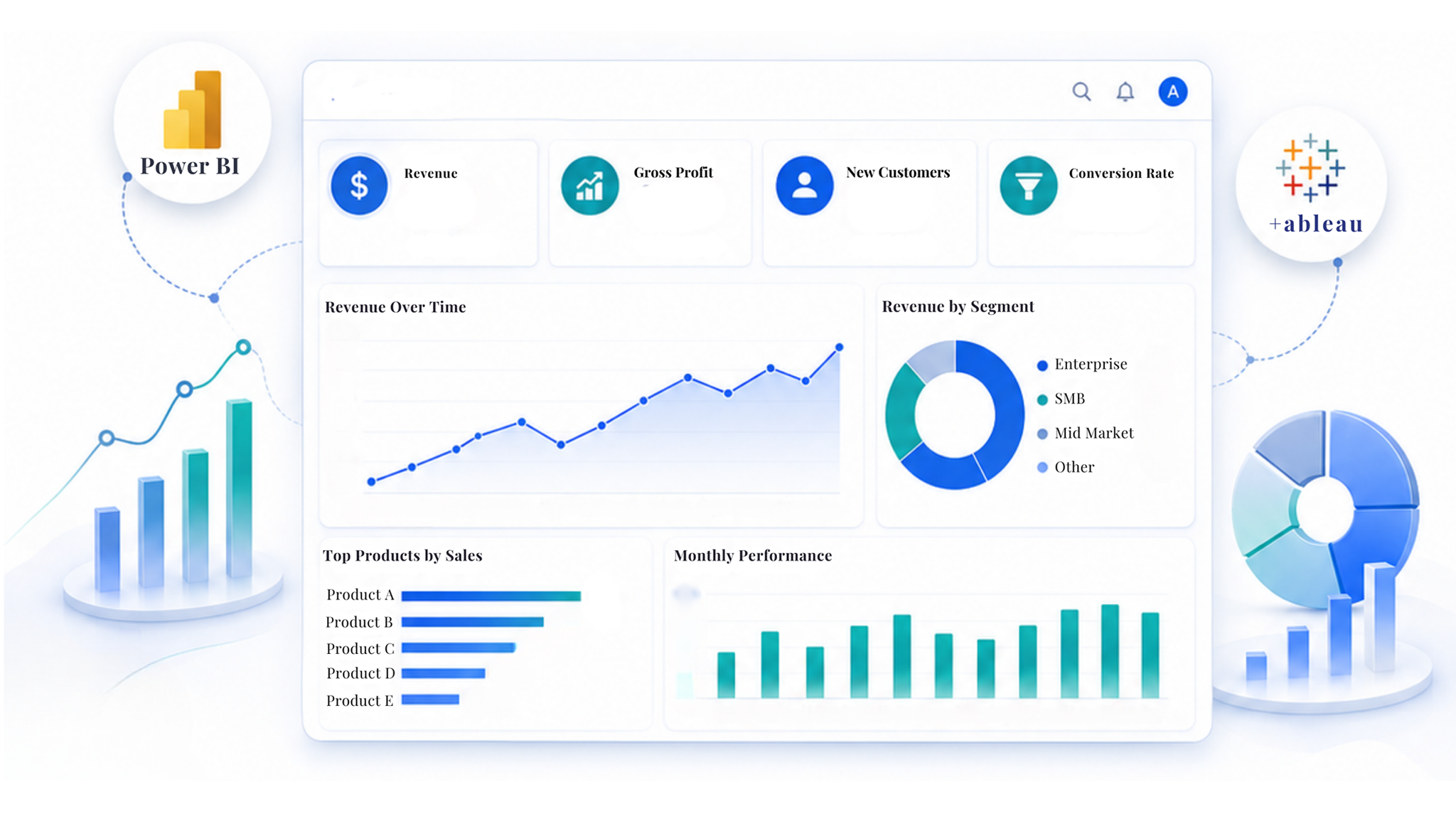
- Business Intelligence (BI): Focuses on what happened or what is happening right now and uses structured, historical data (like sales or finance records). It then displays information through dashboards, charts, and reports (using tools like Power BI or Tableau).
- Data Analytics: Focuses on why it happened and what might happen next. It uses both structured and unstructured data (like logs, text, or social media). It also applies statistical models, machine learning, and deep exploration to predict future trends and solve complex problems.
Strategic decision-making drives business growth, and integrating Business Intelligence (BI) and data analytics upgrades this process through:
- Real-Time Insights: Live data streams from customer interactions and operations let businesses react quickly to market shifts.
- Predictive Forecasting: Historical data and statistical models anticipate future trends, helping companies adjust plans ahead of time.
Business intelligence (BI) and analytics drive customer satisfaction and loyalty by turning data into smart action:
- Customer Behavior Analysis: Companies segment buyers and study habits to customize products, services, and marketing for each group.
- Enhanced Customer Interactions: Predictive tools and data insights spot needs early, solve support issues faster, and deliver a smoother experience.
Business Intelligence (BI) and analytics drive growth and profitability by improving how companies manage daily tasks:
- Process Optimization: Data analysis uncovers workflow bottlenecks, reduces manual errors, and pinpoints tasks ready for automation.
- Cost Reduction: Predictive modeling and supply chain tracking trim resource waste, manage inventory levels, and cut overhead without losing quality.
Protecting your business from threats and following industry laws are vital parts of a strong strategy.
- Risk Assessment: Predictive analytics tools spot potential dangers and measure their impact so you can plan smart solutions early.
- Regulatory Compliance: Business intelligence (BI) systems keep data accurate and verifiable, helping your company meet legal standards and avoid fines.
The Future of Business Intelligence and Data Analytics
- Artificial Intelligence (AI) and Machine Learning (ML) automate data preparation, detect anomalies, generate instant insights, and power predictive and prescriptive models.
- Real-Time Analytics: Organizations have largely abandoned static historical reports in favor of live streaming data dashboards for immediate visibility.
- Self-Service and Data Democratization: Natural language interfaces (such as conversational queries) allow non-technical business users to query complex datasets directly without relying heavily on IT or data teams.
The integration of analytics and business intelligence (BI) is transforming modern businesses into data-driven entities, and Globtier equips organizations with the precise tools and expertise needed to lead this shift.
By partnering with Globtier, companies can seamlessly harness the power of advanced BI to fundamentally optimize how they operate and compete in their respective markets. Globtier’s tailored data solutions empower organizations to accelerate their growth trajectories while establishing a resilient, sustainable competitive edge in the digital age.

Author
Sanskriti Shukla
Head - Marketing & Communications