

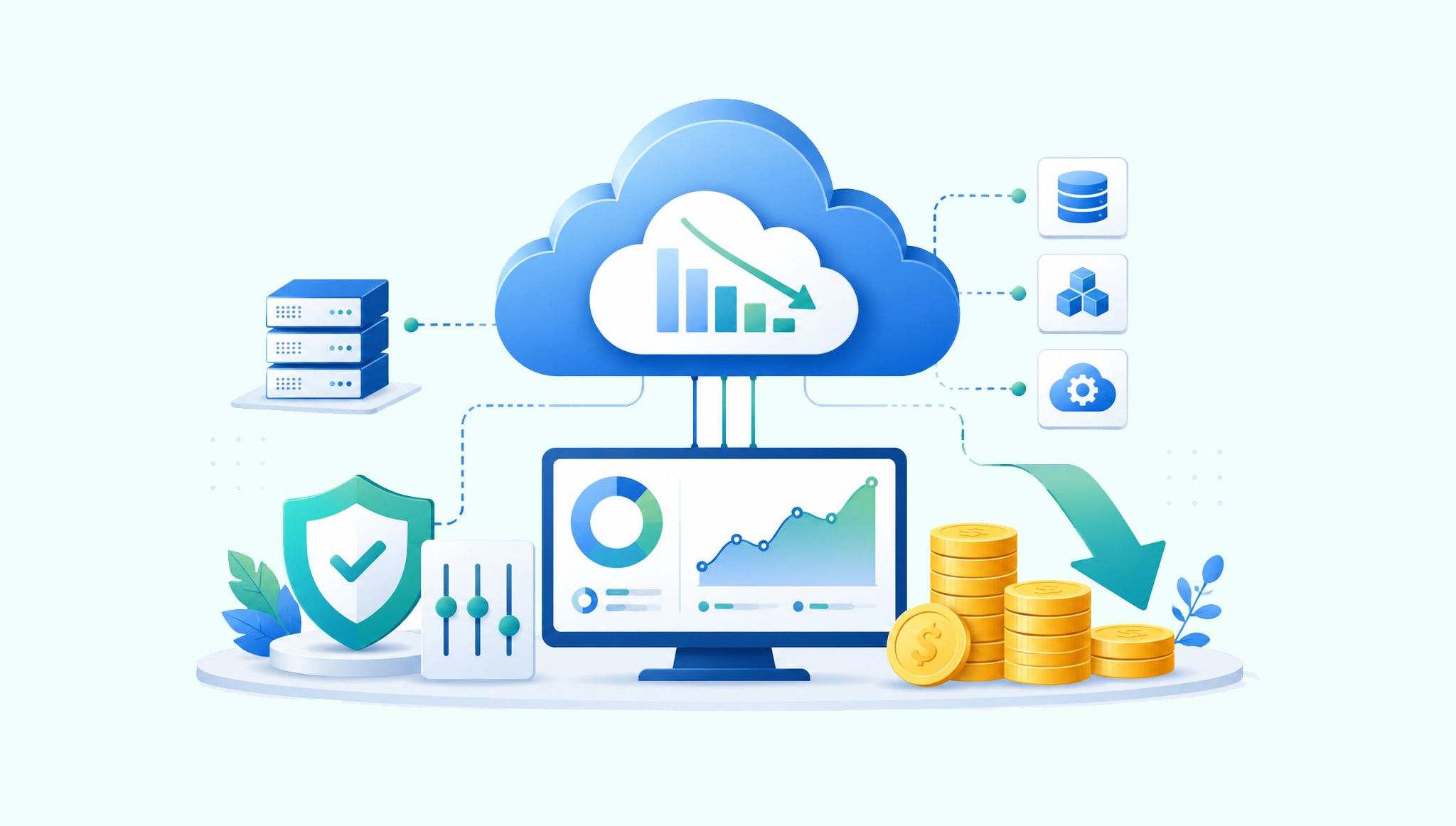
A Beginner’s Guide to Cloud Cost Optimization
Cloud has made it very easy for businesses to build websites, apps, software, and digital platforms. Today, a company can start small, grow fast, and use cloud services whenever needed. But there is one common problem. Cloud costs can increase very quickly if no one is watching them carefully.
Many businesses do not realise how much they are spending until the monthly bill becomes too high. This usually happens because unused services, extra storage, oversized servers, and poor planning keep adding cost in the background. This is where cloud cost optimization becomes important. Cloud cost optimization does not mean stopping innovation or using fewer useful services. It simply means using the cloud in a smart way so that every rupee, dollar, or pound spent gives real value to the business.
What Is Cloud Cost Optimization?
Cloud cost optimisation means using cloud services in a smart, cost-effective way so that money is not wasted. Many businesses use the cloud for websites, apps, storage, software, and other digital work. But when cloud usage is not properly monitored, costs can slowly increase.
Cloud cost optimization helps businesses understand where their cloud money is going. It helps them find unnecessary spending, improve usage, and pay only for the services they actually need.
In simple words, it helps businesses save money, reduce waste, and use the cloud more wisely.
For example, if a company has a cloud server that is running all day but no one is using it, that is wasted money. If a company is using a very large server for a small application, that is also a waste of money. Cloud cost optimization helps businesses find these problems and fix them.
Why Cloud Cost Optimization Matters Today
Cloud is now used for more than websites and storage. Businesses use it to run apps, customer platforms, data analytics, AI workloads, and other important systems. As cloud usage increases, cloud spending also increases.
If costs are not tracked properly, businesses may pay for unused servers, extra storage, oversized resources, or services that are no longer needed. For startups, this can affect growth. For large companies, it can slowly reduce profit margins.
Cloud cost optimization helps businesses control this spending. It allows companies to use cloud services smartly, avoid waste, and plan expenses before the monthly bill becomes a problem.
Key Benefits of Cloud Cost Optimization
- Lower cloud expenses by reducing unnecessary or unused cloud resources.
- Better cost visibility by understanding where cloud spending is happening.
- Improved resource usage by making sure cloud services are used properly.
- Fewer billing surprises by monitoring cloud usage on a regular basis.
- Better budget planning by estimating future cloud costs more clearly.
- Improved performance by using the right cloud resources for the right workload.
Globtier helps businesses manage their cloud usage in a more cost-effective and reliable way. The main focus is to reduce unnecessary cloud spending, improve resource usage, and support better performance.
With a proper cloud cost optimization plan, businesses can control their cloud expenses without affecting daily operations or growth. Globtier can help review current cloud usage, find areas where cost can be reduced, and suggest simple steps for better cloud cost management.

Author
Vijay Vardhan Singh
Team Lead - Digital Marketing