

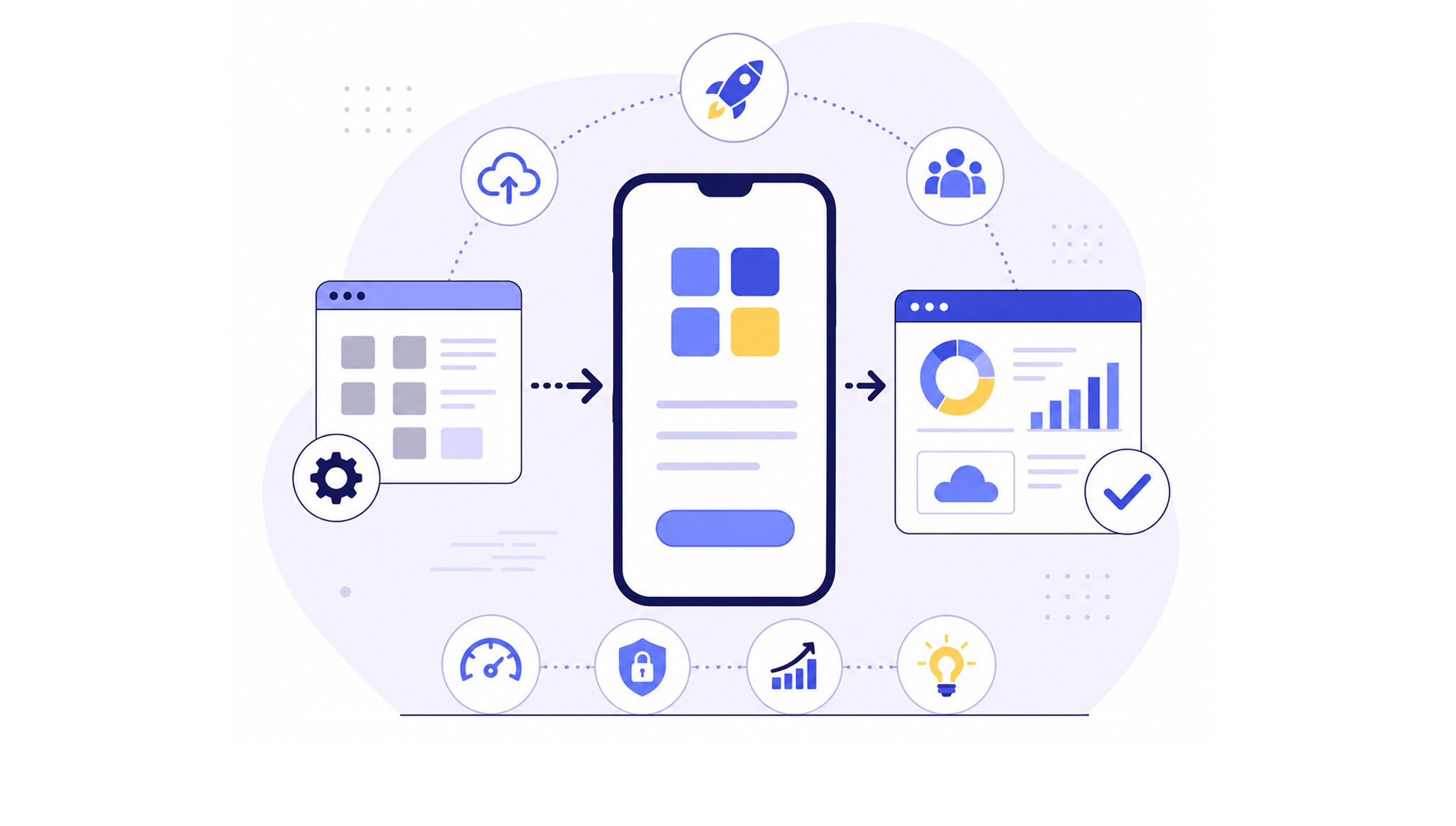
The Role of Application Modernization in Digital Transformation
Digital transformation depends on the speed, reliability, security, and scalability of the applications that support business operations. However, many enterprises still depend on traditional systems that increase maintenance costs, create data silos, slow down processes, and introduce security risks.
Application modernization involves upgrading legacy systems, improving application architecture, simplifying integrations, strengthening security, automating development processes, and preparing applications for greater scalability, analytics, AI, and future business needs.
It helps transform rigid legacy systems into flexible, scalable, and cloud-ready platforms that support faster delivery, better performance, automation, analytics, and AI integration.
Key Pillars of Application Modernization
1. Cloud Migration and CI/CD
Moving applications to secure and scalable cloud environments improve flexibility and infrastructure efficiency.
When combined with CI/CD pipelines and DevOps practices, organizations can automate testing and deployment, release updates faster, and reduce deployment errors.
2. Microservices Architecture
Legacy applications are often built as tightly connected to large module systems. A failure in one component may affect the entire application.
Microservices divide large applications modules into smaller, independent services. Each service can be updated, deployed, and scaled separately, improving resilience and development speed.
3. Secure API Integration
Modernization does not always require rebuilding every legacy application.
Secure APIs, including REST and GraphQL APIs, help connect existing systems with cloud platforms, mobile applications, automation tools, analytics solutions, and third-party services.
4. Consistent Application Deployment and Management
Applications are prepared to run consistently across development, testing, and live environments.
Automated management helps deploy updates, adjust resources, monitor performance, and recover from issues more efficiently.
5. Automation and Platform Engineering
Automation reduces manual work across testing, deployment, monitoring, scaling, backup, and maintenance.
Platform engineering gives development teams access to reusable tools, infrastructure templates, security controls, and standardized workflows, helping improve delivery speed and consistency.
6. Security and Compliance
Legacy systems may contain unsupported software, weak access controls, and outdated security measures.
Modernized applications can include encryption, identity and access management, secure APIs, vulnerability scanning, continuous monitoring, backup, and compliance controls.
7. AI, Automation, and Analytics Readiness
Legacy applications often lack the APIs, scalable infrastructure, and accessible data required to support AI and automation.
Modern architecture makes it easier to integrate intelligent workflows, predictive analytics, business intelligence, and automated decision-making.
Business Benefits of Application Modernization
Application modernization delivers several measurable benefits:
- Faster release of new features
- Lower infrastructure and maintenance costs
- Improved application performance and reliability
- Stronger security and compliance
- Better customer and employee experiences
- Real-time data and analytics
- Greater scalability and operational resilience
- Improved readiness for AI and automation
Continuous Application Modernization
Application modernization should not be treated as a one-time project. Technology, customer expectations, security risks, and business requirements continue to change.uilt.
Organizations should regularly assess their application environment, address technical debt, improve security, and adopt modern development practices.
Not every application needs to be completely rebuilt. Depending on its business value and technical condition, an application may be rehosted, platform change, refactored, replaced, or rebuilt.
Globtier helps enterprises modernize legacy applications into secure, scalable, and future-ready platforms.
Its capabilities include cloud migration, application refactoring, microservices, API integration, Docker, Kubernetes, CI/CD, DevOps, platform engineering, data integration, AI readiness, and managed application services.
Ready to Modernize Your Applications?
Globtier helps organizations build a practical, risk-managed modernization roadmap aligned with their business goals.
Schedule a free consultation with Globtier to assess your current application environment and identify the right modernization opportunities.

Author
Kriti Jain
Digital Marketing Executive